
From Community Voices to Institutional Action: How Citizen Evidence Is Strengthening Water Accountability in Morogoro
By Mwajuma Saluma Basho
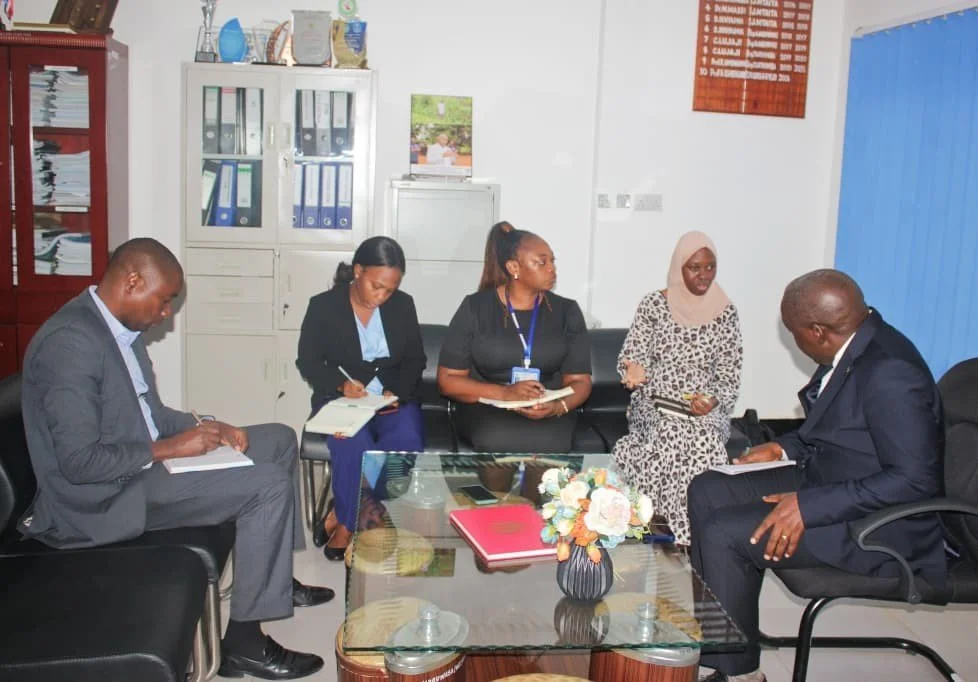
Mwajuma Salum Basho, Accountability for Water Programme Lead in Tanzania, Presenting Evidence to the Morogoro Water Supply and Sanitation Authority
Generating evidence from communities
In April 2026, Shahidi wa Maji conducted a household monitoring assessment in Tungi Ward, Morogoro Municipality, involving 1,560 households across three neighbourhoods. The monitoring examined whether recent investments in water infrastructure had improved household water security and whether communities were experiencing better access to reliable and accountable water services. The findings showed encouraging progress, including increased household water connections, improved water supply schedules, and quicker responses to some infrastructure failures. However, they also highlighted persistent challenges, including irregular water supply, limited communication during service interruptions, delayed responses to complaints, and low awareness of available reporting channels.
Taking evidence to the duty bearer
On 8 July 2026, Shahidi wa Maji presented the findings to the Morogoro Urban Water Supply and Sanitation Authority (MORUWASA) during a dissemination meeting held at the Authority's headquarters. During the meeting, Mwajuma Salum Basho, Research Officer and Lead of the Accountability for Water Programme at Shahidi wa Maji, explained the Accountability for Water Programme and its objectives before presenting key findings from the household monitoring assessment. The presentation highlighted both the progress communities have observed since 2023 and the areas where further improvements are needed to strengthen water security and accountability.
The MORUWASA welcomed the findings and commended Shahidi wa Maji for generating evidence that helps address community challenges. The duty bearer emphasised the need for involvement from the earliest stages of research. In response to the report, MORUWASA explained both short-term and long-term investments to improve water supply services in Tungi, Mkundi, and Lukobe wards in Morogoro Municipality.
Why this engagement matters
The dissemination meeting created a platform where community-generated evidence could directly inform discussions with senior decision-makers responsible for water service delivery. The meeting strengthened MORUWASA's understanding of Accountability for Water knowledge products and created an opportunity for institutional uptake of the findings. The Authority expressed its commitment to reviewing the report and emphasised the importance of continued collaboration throughout future evidence-generation processes.
A lesson for accountability programming
One important lesson emerging from this experience is that evidence is most influential when it is co-produced with those who will ultimately use it. Engaging duty bearers only after research is complete limits opportunities for ownership and uptake. In contrast, involving institutions throughout the evidence-generation process creates trust, strengthens relationships, and increases the likelihood that recommendations will be valued and used to inform policy and practice.
For accountability programmes, this demonstrates that evidence should not be viewed simply as a product to disseminate. It is a process of continuous engagement that connects communities, civil society organisations, and public institutions to jointly identify problems and develop solutions.
As the Accountability for Water Programme continues across Tanzania, Kenya, and Ethiopia, this experience from Morogoro illustrates how community evidence can move beyond reports to become a practical tool for improving water governance and strengthening accountability between citizens and duty bearers.
